

What is the use of city and guilds certificates?Old sample of city and guild certificates before 2000,Order city and guild certificates Online.

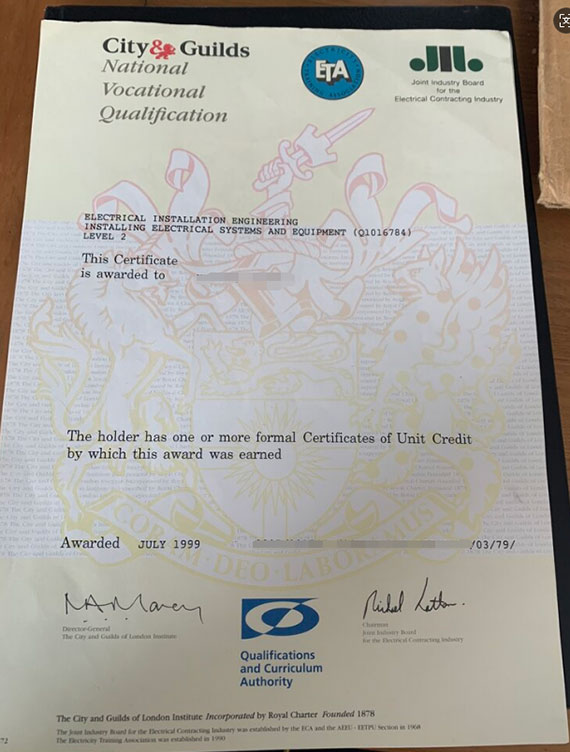
City & Guilds certificates are vocational and technical qualifications issued by City & Guilds, a UK-based awarding organisation. Their main purpose is to demonstrate that a person has acquired practical, technical, or occupational skills in a particular field.
- Employment
- They can demonstrate job-related skills to employers.
- Common areas include:
- Engineering and manufacturing
- Construction
- Electrical installation
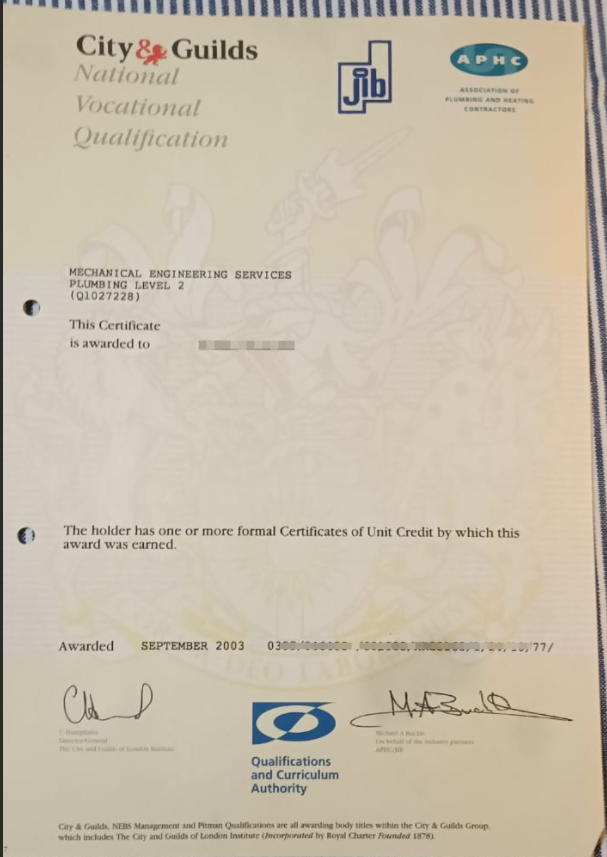
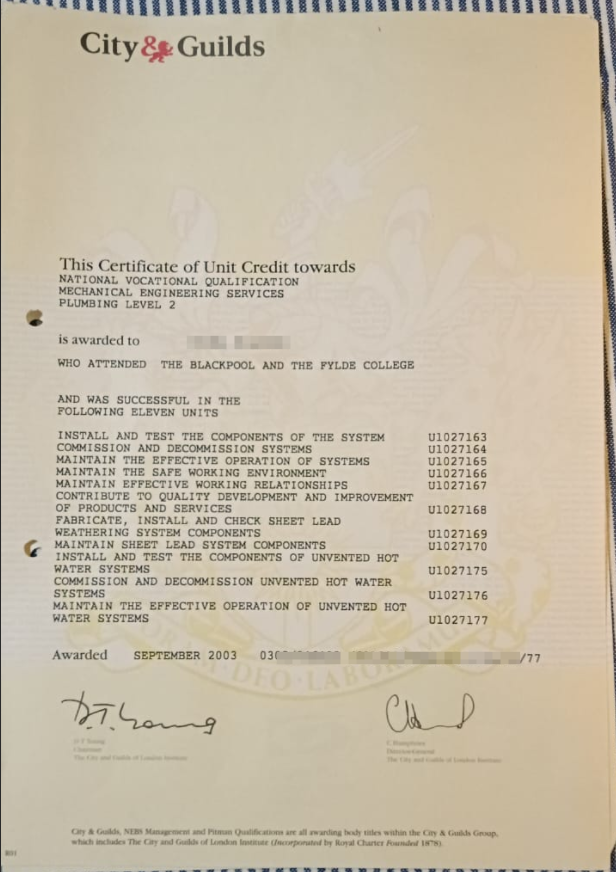
- Plumbing
- Hospitality and catering
- Hairdressing and beauty
- Health and social care
- IT and digital skills
- Professional skills recognition
- A certificate can provide formal recognition of vocational competence or knowledge in a specific occupation.
- Career advancement
- Higher-level City & Guilds qualifications can help workers develop additional technical or supervisory skills and progress within their careers.
- Further education
- Some City & Guilds qualifications can be used as progression routes to higher-level vocational qualifications, apprenticeships, or other training.
- International use
- City & Guilds qualifications are used in many countries and may be accepted by employers, training organisations, and educational institutions. However, recognition and equivalency depend on the specific qualification and country.


Which industries are covered by the city and guild certificates?
- Construction and Utilities: Carpentry, plumbing, bricklaying, electrical work, and network construction.
- Building Services Engineering (BSE): Heating, ventilation, air conditioning, and refrigeration.
- Engineering, Manufacturing, and Transport: Mechanical engineering, automotive maintenance, aerospace, and chemical manufacturing.
- Health, Care, and Early Years: Dental nursing, pharmacy services, adult care, and child care.
- Hospitality, Catering, Retail, and Tourism: Professional cookery, food safety, hotel operations, and customer service.
- Hair and Beauty: Hairdressing, barbering, beauty therapy, and complementary therapies.
- Business, Digital, and Professional Services: IT user skills, digital technologies, administration, and management.
- Land-Based Services: Agriculture, horticulture, forestry, and animal management (often through NPTC).
- Skills for Work and Life: Foundational employability skills, workplace literacy, and numeracy.
- Other Skills / Specialized Trades: Creative industries, emergency response, and justice/security services.
Reviews
There are no reviews yet.